


When Should You Use Underwater Waterjet Cutting? A Guide to Rapid Water-Level Control
Underwater waterjet cutting places the workpiece and cutting zone below the catcher-tank water surface. A rapid water-level adjustment system makes it easier to lower the water for loading, raise it for cutting, and change the level for different workpiece heights.
Waterjet buyers often focus first on pressure, table size and cutting-head type. The catcher tank and its water level can have just as much influence on the daily working environment. When the jet enters the tank above the water surface, spray and noise can spread around the cutting zone. Raising the water above the workpiece adds a water layer around the jet impact area and helps contain that energy at the source.
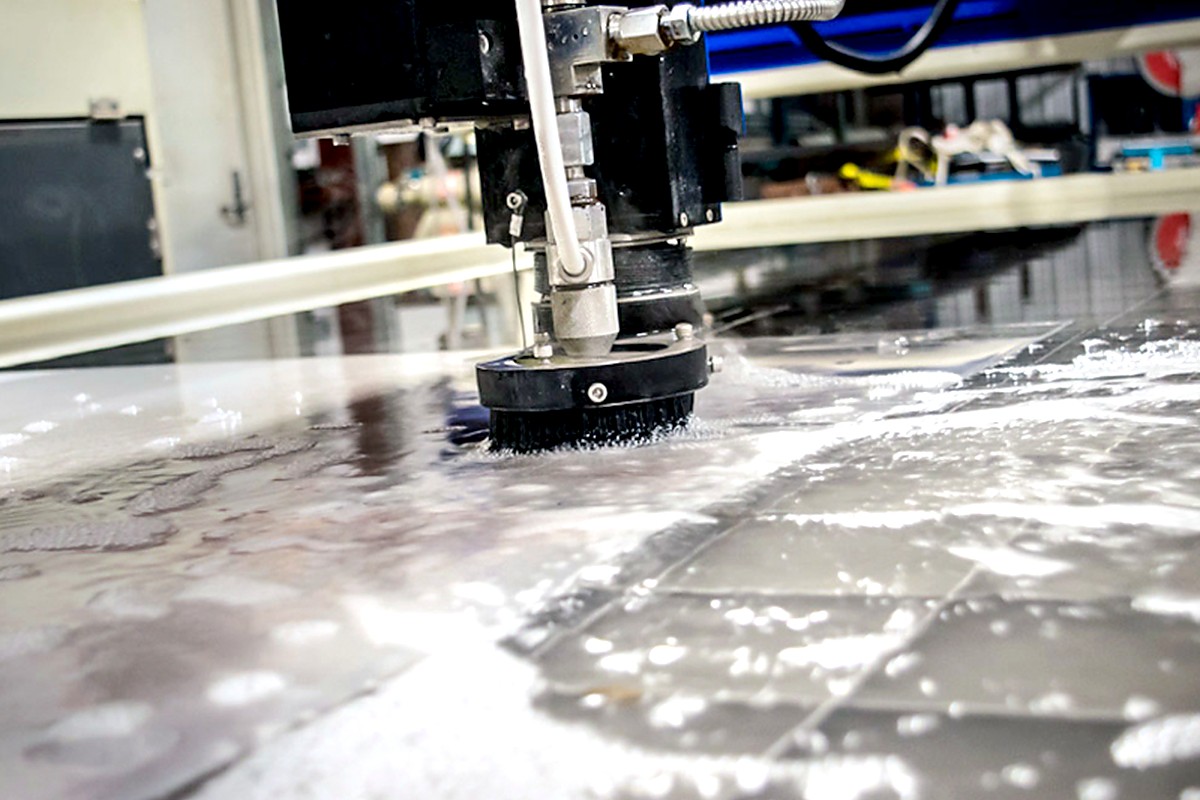
What Underwater Waterjet Cutting Means
“Underwater” does not mean the complete machine is submerged. It means the catcher-tank water surface is raised above the workpiece and the active cutting zone. The cutting head remains positioned at the required standoff, while the jet travels through a shallow water layer before entering the material.
The same machine may cut above water for one job and below water for another. The appropriate arrangement depends on the part, fixture, plate thickness, required visibility and the available water-level travel. A rapid adjustment system reduces the effort involved in moving between those conditions.
Why Shops Choose to Cut Underwater
Lower process noise
The surrounding water dampens sound from the jet and cutting zone. The pump, chiller, abrasive feed and other equipment can still generate noise, so the complete installation must be evaluated separately.
Less mist and splash
Keeping the jet impact below the water surface helps contain water, abrasive and debris close to the cut instead of allowing them to spread around the tank.
Cleaner surroundings
Reduced spray can mean less frequent wiping of the machine structure and a more controlled area around the cutting table. Normal housekeeping and abrasive-waste removal are still required.
Surface protection in some jobs
Submerged cutting can help reduce the visible frosting that may appear around the top edge of some abrasive-waterjet cuts. The result depends on material and process settings and should be verified by a sample cut.
How Rapid Water-Level Adjustment Fits the Workflow
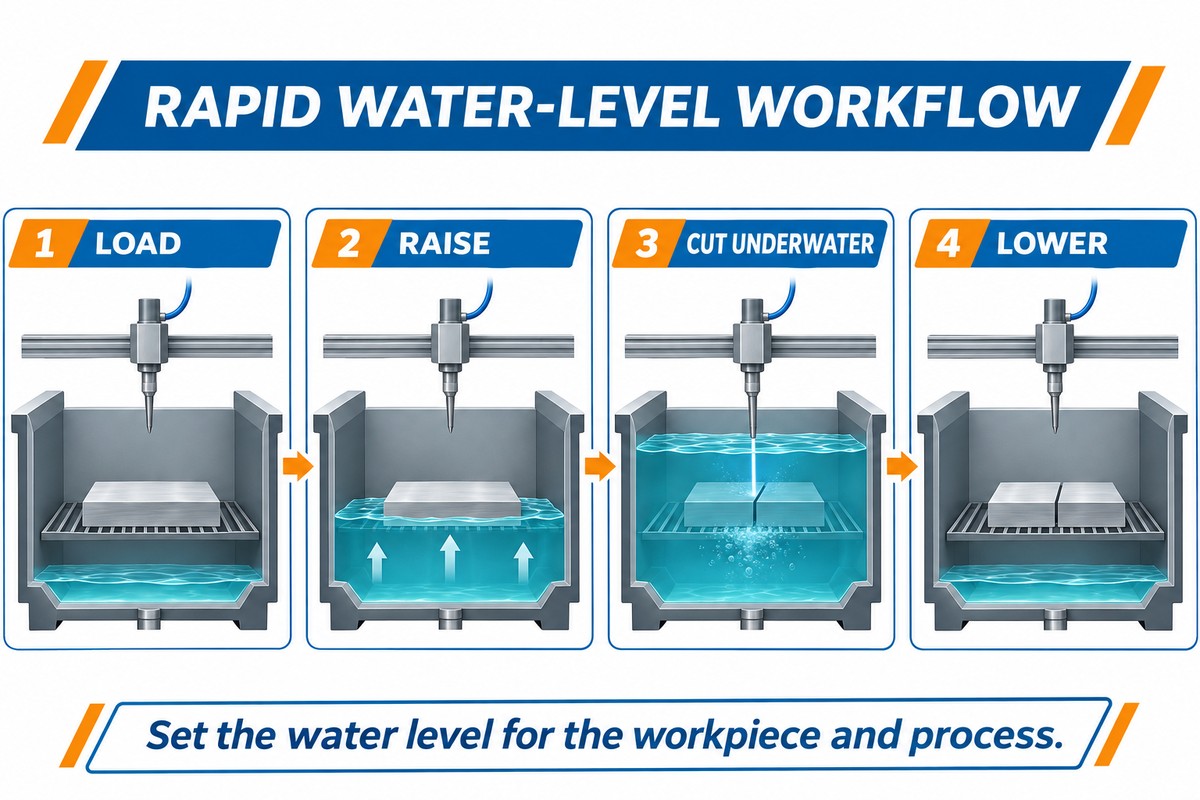
A fixed high water level can make loading, alignment and part retrieval inconvenient. A rapid water-level system allows the operator or machine control to change the level around the production sequence. The exact actuation and control method depends on the selected YH machine configuration.
- Lower the water for loading. Provide practical access to the slats, clamps and material while checking that the tank has sufficient capacity and drainage control.
- Position and secure the workpiece. Confirm that the material will not float, shift or become unstable as the level rises.
- Raise the water to the planned level. Cover the active workpiece area while maintaining suitable clearance for the nozzle, head components and fixtures.
- Cut with the approved process. Verify standoff, piercing strategy, abrasive flow and toolpath before starting production.
- Lower the level for inspection and unloading. Wait until motion and high pressure have stopped, then retrieve parts according to the machine's operating procedure.
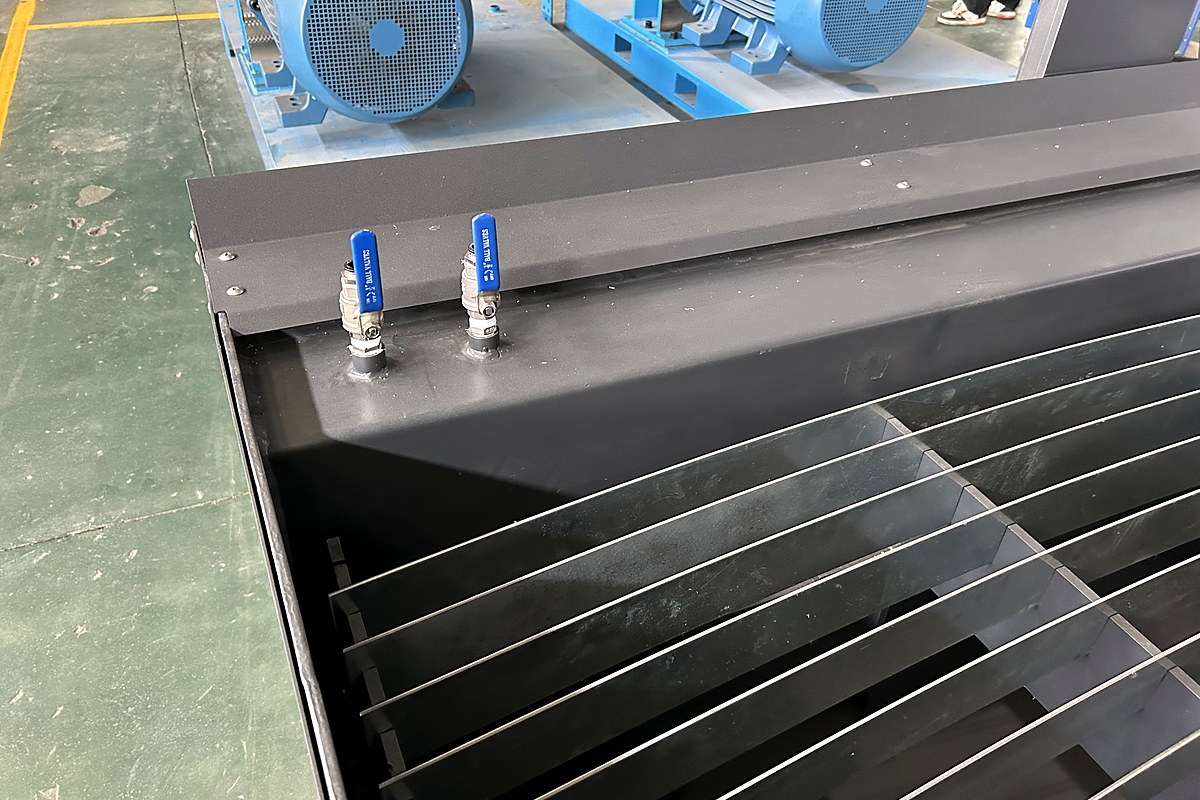
The YH Rapid Water-Level Adjustment Option
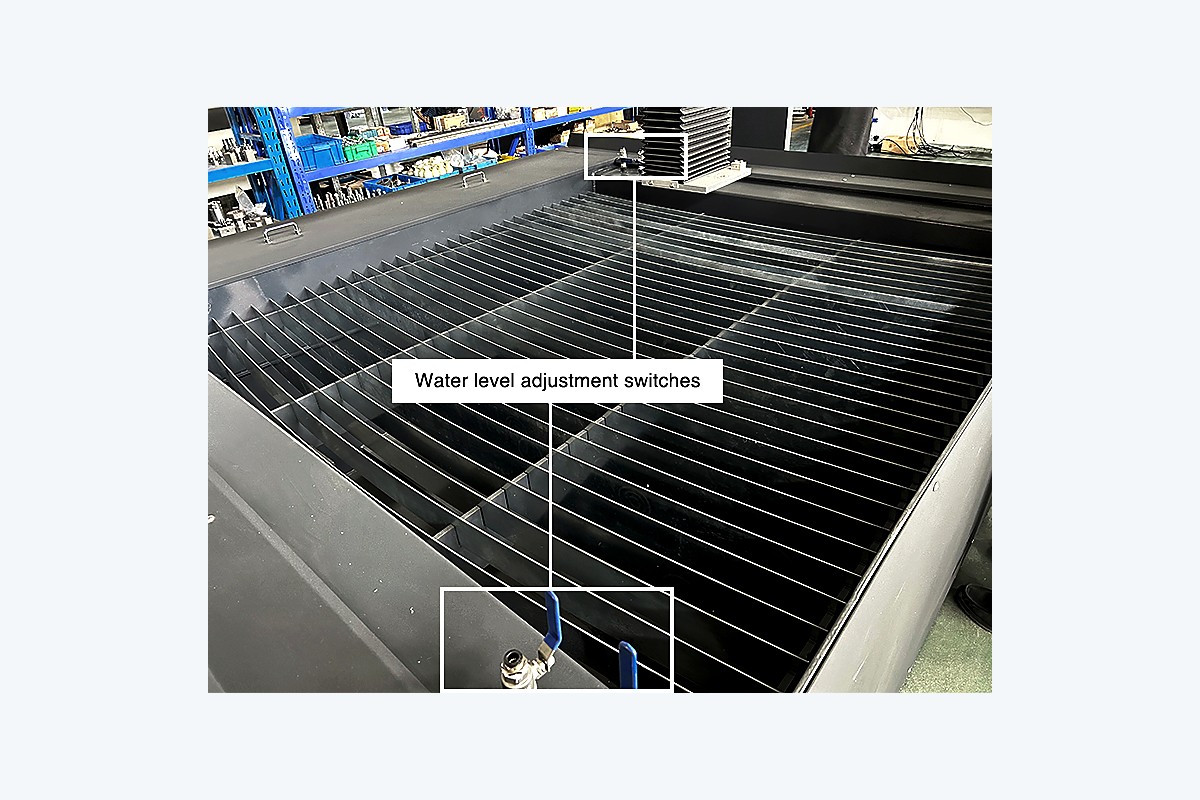
YH WATERJET offers a rapid water-level adjustment option for compatible machine configurations. The system is intended to raise or lower the catcher-tank water level and support both underwater and above-water working conditions. The current YH product description also identifies automatic adjustment and water-level changes during cutting as available functions.
The control method, available level range, adjustment time and machine compatibility must be confirmed for the quotation. These details can vary with tank dimensions, plumbing, air supply, drain arrangement and the selected automation package.
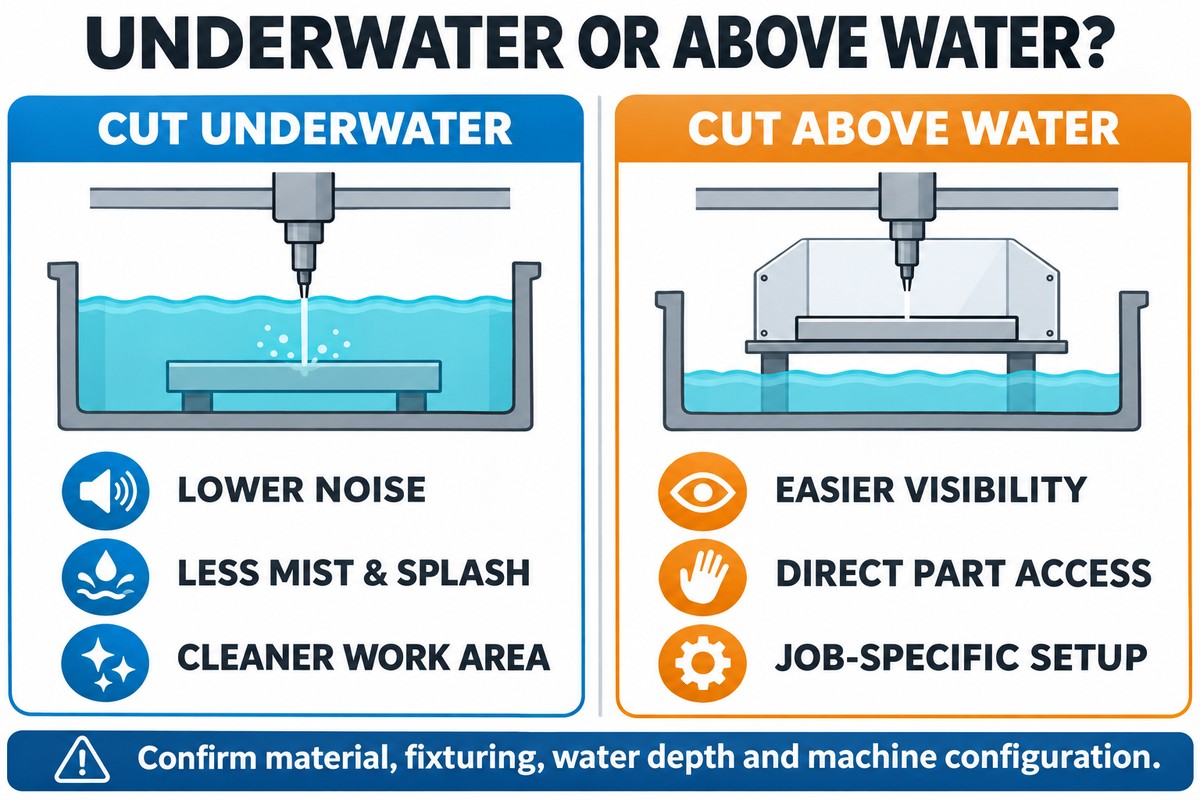
Underwater or Above Water: Which Setup Fits the Job?
| Decision point | Underwater cutting | Above-water cutting |
|---|---|---|
| Noise at the cutting zone | Usually lower because the water layer surrounds the jet impact area | Usually more exposed; evaluate guards and workshop layout |
| Mist and abrasive splash | Better contained at the source in many applications | May require a nozzle guard, splash shields or other containment |
| Visibility | The cut and small parts are harder to see through moving water | Direct viewing can be easier, subject to safe guarding |
| Part access | The level normally needs to be lowered before convenient inspection or unloading | Direct access can be simpler after the process is safely stopped |
| Fixturing | Clamps and parts must remain stable as the water rises | Useful where the fixture or workpiece should not be submerged |
| Best choice | Cleaner, quieter routine production when the application supports submersion | Jobs that prioritize visibility, access or require a job-specific dry setup |
Cases Where Underwater Cutting Needs Extra Review
Submerged cutting is useful, but it is not automatically correct for every job. Review the setup carefully when:
- the workpiece, coating or fixture should not remain in water;
- the material or part geometry may trap air or become buoyant;
- the cut requires frequent visual inspection or manual intervention;
- the fixture, clamps or tilted five-axis head could interfere with the water surface or tank structure;
- the plate thickness exceeds the available submerged clearance;
- small cut parts could move, tip or become difficult to retrieve;
- water chemistry, corrosion control or post-cut drying requires a special procedure.
What to Confirm Before Ordering
To configure a rapid water-level system responsibly, provide YH WATERJET with the following information:
- machine model or requested table size;
- maximum workpiece dimensions, thickness and weight;
- material name, grade, coating and corrosion concerns;
- fixture and clamp arrangement, including the highest point above the slats;
- three-axis or five-axis cutting-head configuration and required tilt range;
- desired underwater depth and whether mixed above/below-water work is required;
- available compressed air, water supply, drain and overflow arrangement;
- required control method and whether water-level adjustment is needed during the program;
- target loading cycle, batch size and cleaning procedure.
A sample cutting trial can confirm process suitability, but the factory layout also matters. Tank access, drainage, surrounding floor condition and abrasive-waste handling should be planned as part of the complete machine installation.
Frequently Asked Questions
Does underwater cutting reduce waterjet cutting power?
The purpose of the water layer is to contain the cutting zone, not to replace the cutting process. Actual performance still depends on pressure, nozzle combination, abrasive flow, material, thickness, standoff and speed. Verify the required edge quality with a representative sample.
How far above the workpiece should the water be?
There is no responsible universal depth for every machine and application. The level must provide useful containment while maintaining clearance for the head, fixtures and workpiece. YH should confirm the available range for the selected tank.
Does underwater cutting eliminate all noise and splash?
No. It can substantially reduce noise, mist and splash at the cutting zone, but the pump and auxiliary equipment still produce sound, and some toolpaths or pierces may create local spray.
Can the machine also cut above water?
A level-adjustable system is intended to support different water positions. The available operating modes and whether the level can change during cutting must be confirmed for the quoted YH configuration.
Is rapid water-level control standard on every YH machine?
No universal standard configuration is assumed. Treat it as a machine-specific option until YH confirms compatibility, tank design, controls and quotation scope.
Configure the Water Level Around Your Real Workpiece
Send YH WATERJET your material, maximum dimensions, fixture drawing, desired table size, cutting-head type and workshop utility information. Our team can review whether underwater cutting and a rapid water-level adjustment system should be included in your machine configuration.